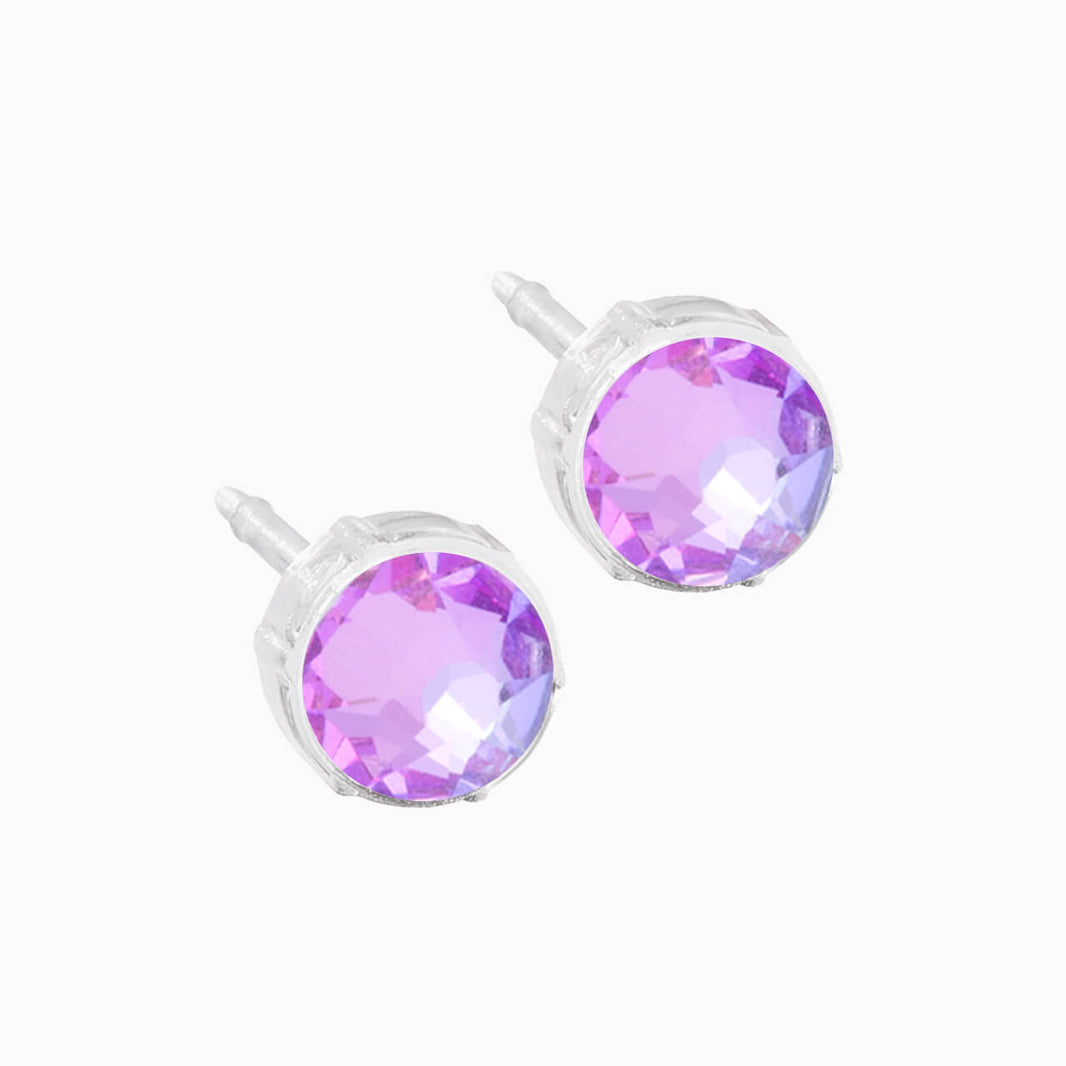
Hypoallergenic Earrings Guide

If your ears turn red, itchy, swollen or sore within hours of trying on a new pair of earrings, you're not alone. Metal sensitivity is one of the most common reasons people stop wearing earrings altogether. It's also why so many shoppers search for hypoallergenic earrings.
But what does "hypoallergenic" actually mean? Are all hypoallergenic earrings safe for sensitive ears? And what's the difference between surgical steel, sterling silver, titanium and medical plastic?
This guide covers what the term means, which materials cause reactions, how to choose the best earrings for sensitive ears, and the questions shoppers ask most. It's written for adults with a known metal allergy, parents choosing a child's first earrings, and anyone who's never found a pair that feels comfortable.
Key takeaways
- "Hypoallergenic" means less allergenic, not allergy-proof, and the term isn't regulated in the United States.
- Nickel is the most common cause of earring reactions, and jewelry is the most common source of nickel exposure.
- Surgical steel, sterling silver and lower-karat or white gold can contain nickel.
- Pure medical-grade titanium and metal-free medical-grade plastic are the most reliable choices for sensitive ears.
- Check the post and back, not just the front. They touch your skin the most.
What are hypoallergenic earrings?
Hypoallergenic earrings are earrings made from materials that are unlikely to cause an allergic reaction. "Hypo" means "less" or "under," so "hypoallergenic" literally means "less allergenic." It doesn't mean "allergy-proof."
There's an important catch: "hypoallergenic" is not a regulated term in the United States. No federal standard defines how little nickel (or any other allergen) a piece of jewelry must contain before it can be sold as hypoallergenic. Brands can put the word on almost anything, including jewelry that's only plated over a nickel-containing base metal. We explain this in more depth in our article on why "hypoallergenic" isn't always safe.
The European Union takes a stricter approach. Under the EU Nickel Directive (2004/96/EC), items inserted into piercings or held in prolonged contact with skin must meet strict limits on nickel release. The American Academy of Pediatrics has called for similar rules in the U.S., because there's no equivalent protection here.
So a hypoallergenic label is a starting point, not a guarantee. What really matters is what the earring is made of, which parts touch your skin, and whether the manufacturer can prove its materials are safe.
Why do earrings cause allergic reactions?
Most earring reactions are allergic contact dermatitis, an immune response to a substance that touches the skin. The most common trigger by far is nickel.
Nickel is inexpensive, strong and easy to work with, so it's used widely in fashion jewelry, in the base metal under plating, and in alloys such as some steels and white gold. When nickel-containing metal sits against skin, especially skin that's warm, damp or freshly pierced, small amounts of nickel can be released and absorbed.
The numbers are significant. A 20-year analysis of North American Contact Dermatitis Group data found that among patients who were patch-tested, nickel sensitivity rose from 14.3% to 20.1%. The study named jewelry as the most common source of nickel exposure. Women were significantly more likely than men to be nickel-sensitive, which researchers link in part to higher rates of ear piercing.
Ear piercing matters because a new piercing is an open wound. Metal placed in it has direct contact with tissue, and that's when many people first become sensitized. Once you've developed a nickel allergy, it's generally lifelong, and later reactions can happen with even brief contact.
Common signs you're allergic to your earrings
- Itching, redness or a rash on or around the earlobe
- Swelling, tenderness or a burning feeling
- Dry, scaly or flaking skin
- Weeping, crusting or discharge in more severe cases
- Symptoms that appear 12–48 hours after wearing a particular pair
If this sounds familiar, read our guide to allergic reactions to earrings. If symptoms are severe or don't clear up, see a doctor or dermatologist. They can confirm a nickel allergy with patch testing.
Which earring materials are safe for sensitive ears?
Pure medical-grade titanium and medical-grade plastic are the safest common earring materials for sensitive ears. Fashion metal, surgical steel, sterling silver and some gold can contain nickel. Here's how the most common earring materials compare.
| Material | Contains nickel? | Good for sensitive ears? | What to know |
|---|---|---|---|
| Fashion/costume metal | Often | Avoid | Low-cost base metals and plating frequently contain nickel. Plating can wear off and expose it. |
| Surgical steel | Yes | Not ideal | "Surgical steel" isn't a single standard. Common grades such as 316L contain nickel. Some people tolerate it, but many people with a nickel allergy don't. |
| Sterling silver | Sometimes | Varies | Sterling is 92.5% silver alloyed with other metals, usually copper. It can tarnish, and quality varies. |
| Gold (10k–18k) | Sometimes | Varies | Lower-karat and white gold may contain nickel. Gold-plated and gold-filled pieces depend on what's underneath. |
| Pure medical-grade titanium | No | Excellent | Lightweight, strong, corrosion-resistant and biocompatible. It's used in medical applications. |
| Medical-grade plastic | No (metal-free) | Excellent | Completely metal-free and featherlight. It's the gentlest option for extremely reactive skin. |
The takeaway: if you have sensitive ears or a nickel allergy, the most reliable choices are nickel-free earrings made from pure medical-grade titanium or medical-grade plastic. That's why these are the only two materials Blomdahl uses on the parts that touch your skin.
Are titanium earrings good for sensitive ears?
Yes. Pure medical-grade titanium is nickel-free and biocompatible, which makes titanium earrings one of the most popular choices for sensitive ears. The body tolerates titanium well, which is why it's trusted in medical applications.
Blomdahl's pure medical-grade titanium meets the ASTM F67 standard for unalloyed titanium used in surgical applications, and it's nickel-free. It's also:
- Lightweight, so earrings feel comfortable all day, even in larger styles
- Strong and durable, holding stones and settings securely
- Corrosion-resistant, so it won't react with sweat or water
- Waterproof and tarnish-proof, so you can wear it 24/7, in the shower and even while swimming
Titanium finishes: natural, silver, gold and black
Many shoppers with a nickel allergy think they have to give up the look of gold or silver. They don't. Blomdahl's natural titanium earrings are uncoated. The silver, gold and black styles use a skin-friendly ceramic coating over the titanium, so you get a classic jewelry look with titanium's comfort underneath.
Browse the full titanium earrings collection, or shop by finish: gold titanium earrings and silver titanium earrings. You'll find studs, crystal and pearl styles, drops, hoops and ear hooks.
Best for: everyday wear, people who want a classic metal look, adults and kids with nickel sensitivity, and anyone who wants durable earrings they rarely need to take out.
Are medical plastic earrings safe for sensitive ears?
Yes. Medical-grade plastic earrings are completely metal-free, so there's no nickel or any other metal to react to. They're the gentlest option for the most reactive skin.
Blomdahl's medical-grade plastic is free from nickel and a wide range of harmful substances, including BPA, latex, lead and cadmium. It's also:
- Featherlight, ideal for small or delicate earlobes
- Metal-free, a strong choice for people with multiple metal sensitivities
- Waterproof and tarnish-proof, and safe to wear 24/7
- Available in playful colors and shapes, including crystals, hearts, stars, flowers and butterflies
Medical-grade plastic is a favorite among parents choosing hypoallergenic earrings for kids, teens with sensitive skin, and adults who react even to "safe" metals. Shop the medical plastic earrings collection.
Best for: extremely sensitive skin, multiple metal allergies, children, and anyone who wants the lightest earring possible.
Titanium vs. medical plastic: which should you choose?
Choose titanium for a classic metal look, or medical plastic if you react to many metals or want the lightest, gentlest option. Both are excellent hypoallergenic earrings for sensitive ears.
| Feature | Pure medical-grade titanium | Medical-grade plastic |
|---|---|---|
| Nickel-free | Yes | Yes |
| Metal-free | No (pure titanium) | Yes |
| Weight | Lightweight | Featherlight |
| Look | Natural, silver, gold or black finishes | Clear and colored, playful styles |
| Waterproof and tarnish-proof | Yes | Yes |
| Great for kids | Yes | Yes |
| Best if you… | want a classic jewelry look with proven skin safety | react to many metals or want the gentlest option |
Many Blomdahl customers own both: titanium for everyday or dressier looks, and medical plastic for sleep, sports or especially reactive days.
How to choose the best earrings for sensitive ears
Use this checklist when you shop for hypoallergenic earrings from any brand:
- Check every part, not just the front. The post and the back touch your skin the most. A hypoallergenic front on a nickel-containing post won't help.
- Look for named materials. "Pure medical-grade titanium" or "medical-grade plastic" is meaningful. Vague terms like "hypoallergenic alloy" or "surgical metal" aren't.
- Be cautious with plating. Gold- or silver-plated jewelry can wear down and expose the base metal underneath.
- Ask for proof. Reputable brands can point to standards and certifications. Blomdahl jewelry is made in Halmstad, Sweden, under ISO 13485 (the quality standard for medical devices), complies with the EU Nickel Directive, and is designed in consultation with dermatologists.
- Think about weight. Heavy earrings can stretch and irritate lobes. Lightweight titanium and plastic are more comfortable for long wear.
- Choose hygienic packaging. You should be the first person to touch your earrings. Blomdahl earrings come sealed in clean packs.
Learn more about how Blomdahl makes skin-friendly jewelry.
What are the best earrings for a new piercing?
The first earrings you wear in a new piercing matter most. The piercing is still healing, so the material sits directly against tissue, which is when sensitization to nickel often begins.
That's why Blomdahl's medical ear piercing system uses only pure medical-grade titanium or medical-grade plastic. The piercing earrings are designed to support healing, with backs that cover the tip. The system is a popular choice for children's first ear piercing, because starting with nickel-free earrings can help reduce the risk of developing a nickel allergy later.
After piercing, follow your piercer's aftercare instructions and keep the area clean. Cartilage piercings take longer to heal, at least 12 weeks. Find cleansers and replacement backs in our earring backs and aftercare collection.
The bottom line
"Hypoallergenic" is a helpful word, but it isn't a promise. The best way to protect sensitive ears is to know exactly what your earrings are made of. Pure medical-grade titanium and metal-free medical-grade plastic are two of the most skin-friendly materials available.
When they're made in a certified medical-device facility and designed with dermatologists, you can wear earrings again without the red, itchy, irritated skin.
Ready to find your pair? Shop Blomdahl's hypoallergenic earrings, made from pure medical-grade titanium and medical-grade plastic.
Hypoallergenic earrings FAQ
What are hypoallergenic earrings?
Hypoallergenic earrings are made from materials unlikely to cause allergic reactions, most importantly, without nickel. Because the term isn't regulated in the U.S., look for specific materials like pure medical-grade titanium or medical-grade plastic.
Are hypoallergenic earrings nickel-free?
Not always. Some earrings labeled hypoallergenic still contain nickel or have nickel in their base metal. For a nickel allergy, choose earrings clearly described as nickel-free, made from medical-grade titanium or metal-free medical plastic.
Is surgical steel hypoallergenic?
Surgical steel is often marketed as hypoallergenic, but common grades contain nickel. Many people with a nickel allergy react to it. Titanium and medical plastic are safer choices.
Is sterling silver hypoallergenic?
Sterling silver is alloyed with other metals, and quality varies. It can also tarnish. It works for some people, but it's not the most reliable choice for very sensitive ears.
Are gold earrings hypoallergenic?
High-karat yellow gold is less likely to cause reactions, but lower-karat and white gold can contain nickel. Plated pieces depend on the metal underneath. Gold titanium earrings give you a gold look over nickel-free titanium.
Are titanium earrings good for sensitive ears?
Yes. Pure medical-grade titanium is nickel-free, lightweight and biocompatible, which makes titanium earrings one of the best options for sensitive ears and nickel allergy.
What are the best earrings for extremely sensitive ears?
If you react to many metals, metal-free medical-grade plastic earrings are the gentlest option. Pure medical-grade titanium is a close second, and most people with a nickel allergy tolerate it well.
Why do my ears itch when I wear earrings?
Itching, redness and swelling are common signs of a nickel allergy (allergic contact dermatitis). Try switching to nickel-free earrings, and see a dermatologist if symptoms persist.
Can I sleep and shower in hypoallergenic earrings?
Blomdahl titanium and medical plastic earrings are waterproof, tarnish-proof and safe to wear 24/7, including in the shower and while swimming.
Are hypoallergenic earrings safe for kids?
Yes. Nickel-free titanium and medical plastic earrings are trusted for children and adults, and Blomdahl provides a Children's Product Certificate. See our FAQ for more answers.
Sources
- Warshaw EM, et al. "Epidemiology of nickel sensitivity: Retrospective cross-sectional analysis of North American Contact Dermatitis Group data 1994–2014." Journal of the American Academy of Dermatology, 2019;80(3):701–713. doi:10.1016/j.jaad.2018.09.058
- Commission Directive 2004/96/EC on nickel in post assemblies inserted into pierced ears and other pierced parts of the body. EUR-Lex
- American Academy of Pediatrics. "Nickel-Allergic Contact Dermatitis: Identification, Treatment, and Prevention." Pediatrics, May 2020. AAP policy summary